Tapioca (Portuguese pronunciation: [tapiˈɔkɐ]) is a starch extracted
from cassava root (Manihot
esculenta). This species is native to the North Region of
Brazil, but spread throughout the South American continent. The plant was
carried by Portuguese and Spanish explorers to most of the
West Indies, and continents of Africa and Asia, including the Philippines and Taiwan.
It is now cultivated worldwide.
A staple food in many
world regions, tapioca is used as a thickening agent in
various foods.
Tapioca is one of the purest forms of
starch food, and the production varies from region to region.
The cassava plant has either red or
green branches with blue spindles on them. The root of the green-branched
variant requires treatment to remove linamarin, a cyanogenic
glycoside occurring naturally in the plant, which otherwise may be converted
into cyanide Konzo (also called mantakassa) is a
paralytic disease associated with several weeks of almost exclusive consumption
of insufficiently processed bitter cassava.
In the north and northeast of Brazil,
traditional community-based production of tapioca is a by-product of manioc
flour production from cassava roots. In this process, the manioc
(after treatment to remove toxicity) is ground to a pulp with a small hand- or
diesel-powered mill. This masa is then squeezed to dry it out.
The wet masa is placed in a long woven tube called a tipiti. The top of the tube is
secured while a large branch or lever is inserted into a loop at the bottom and
used to stretch the entire implement vertically, squeezing a starch-rich liquid
out through the weave and ends. This liquid is collected and the water allowed
to evaporate, leaving behind a fine-grained tapioca powder similar in
appearance to corn starch.
Commercially, the starch is processed
into several forms: hot soluble powder, meal, pre-cooked fine/coarse flakes,
rectangular sticks, and spherical "pearls". Pearls are the most
widely available shape; sizes range from about 1 mm to 8 mm in
diameter, with 2–3 mm being the most common.
Flakes, sticks, and pearls must be
soaked well before cooking, in order to rehydrate, absorbing water up to twice
their volume. After rehydration, tapioca products become leathery and swollen.
Processed tapioca is usually white, but sticks and pearls may be colored.
Traditionally, the most common color applied to tapioca has been brown, but
recently pastel colors have been available. Tapioca pearls are generally opaque
when raw, but become translucent when cooked in boiling water.
Brazil in South America,
Thailand in Asia, and Nigeria in Africa are the
world's largest producers of cassava. Currently, Thailand accounts for about 60
percent of worldwide exports.
Nutritional
value
Tapioca predominantly consists of carbohydrates,
with each cup containing 23.9 grams for a total of 105 calories; it is low
in saturated fat, protein and sodium. It
has no significant essential vitamins or dietary
minerals. One serving of tapioca pudding contains
no dietary fiber, a small amount of oleic acid, and
no omega-3 or omega-6 fatty acids.
Flat breads
A casabe is a thin flatbread made from
bitter cassava root without leavening. It was originally produced
by the indigenous Arawak and Carib peoples
because these roots were a common plant of the rain forests where
they lived. In eastern Venezuela, many indigenous groups still
make casabe. It is their
chief bread-like staple. Indigenous communities, such as the Ye-Kuana,
Kari-Ña, Yanomami, Guarao or Warao descended from
the Caribe or Arawac nations, still make casabe.
Casabe baking in a small commercial
bakery
To make casabe, the starchy root of bitter cassava is ground to a pulp,
then squeezed to expel a milky, bitter liquid called yare. This carries the poisonous
substances with it out of the pulp. Traditionally, this squeezing is done in
a sebucan, an 8 to 12-foot
(3.7 m) long, tube-shaped, pressure strainer, woven in a characteristic
helical pattern from palm leaves. The sebucan usually is hung from a
tree branch or ceiling pole, and it has a closed bottom with a loop that is
attached to a fixed stick or lever, which is used to stretch the sebucan. When
the lever is pushed down, stretching the sebucan, the helical weaving pattern
causes the strainer to squeeze the pulp inside. This is similar to the action
of a Chinese finger trap. The pulp is spread in thin, round cakes
about 2 feet (0.61 m) in diameter on a budare to roast or toast.
Thin and crisp cakes of casabe are often broken apart
and eaten like crackers. Like bread, casabe can be eaten alone or with other dishes.
Thicker casabe usually
are eaten slightly moistened. A sprinkle of a few drops of liquid is
enough to transform a dry casabe into
a very soft and smooth bread similar to the softest slice of a wheat
bread loaf. Because of its capacity to absorb liquid
immediately, casabemay
cause someone to choke, but goes down quickly with a sip of liquid.
In Guyana, the casabe is called cassava bread.
It is prepared with an instrument called a matape (matapi in Suriname)
by the natives of the Rupununi Savanah and other areas of the
country that have a high concentration of Amerindians. In Jamaica,
it is called bammy.
In Brazil, the cassava
flatbread is called beiju or tapioca.
Tapioca pearls
Taro
flavored bubble tea with tapioca pearls
Tapioca pearls, also known as boba in some cultures, are
produced by passing the moist starch through a sieve under pressure. Pearl
tapioca is a common ingredient in South, East and Southeast
Asian desserts such as falooda, kolak, sago
soup, and in sweet drinks such as bubble tea, fruit
slush and taho, where they provide a chewy contrast to the
sweetness and texture of the drink. Small pearls are preferred for use in
puddings. In Brazil, the pearls are cooked with wine or other liquid to add
flavor and are called sagu.
Large pearls are preferred for use in
drinks. These pearls most often are brown, not white (and traditionally are
used in black or green tea drinks), but today
are available in a wide variety of colors. They are also available as an option
in shave ice and hot drinks.
In addition to their use in puddings
and beverages, a recent innovation has been to cook tapioca pearls inside cakes.
World War II
During World War II, due to
the shortage of food in Southeast Asia, many refugees survived on tapioca. The
cassava plant is easily propagated by stem-cutting, grows well in low-nutrient
soils, and can be harvested every two months, although it takes ten months to
grow to full maturity. The plant provided much needed carbohydrates and other
nutrients.]
Biodegradable
products
Tapioca root
can be used to manufacture biodegradable bags developed from a
tapioca resin of the plant as a viable plastic substitute. Not
only is it biodegradable, but it can be composted, is renewable, reusable, recyclable and sustainable.
Other tapioca resin products include reusable gloves, capes and aprons.]
Laundry
Tapioca starch,
used commonly for starching shirts and garments before ironing,
may be sold in bottles of natural gum starch to be dissolved
in water or in spray cans.
South America ,Brazil.
In Brazilian cuisine,
tapioca is used for different types of meals. In beiju (or biju), the tapioca
is moistened, strained through a sieve to become a coarse flour, then sprinkled
onto a hot griddle or pan, where the heat makes the starchy grains fuse into a
flatbread which resembles a grainy pancake. Then it may be buttered and eaten
as a toast (its most common use as a breakfast dish), or it may be filled or
topped with either salgados (salty
pastry recipes) or doces (sweet
pastry recipes), which define the kind of meal the tapioca is used for:
breakfast/dinner, or dessert. Choices for fillings range from butter, cheese,
ham, bacon, various kinds of meat, chocolate, fruits such
as ground coconut, condensed milk, chocolate with sliced pieces of
banana or strawberry, among others. This kind of tapioca dish is
usually served warm.
A regional dessert called sagu is also made in Southern Brazil
from tapioca pearls cooked with cinnamon and cloves in red wine. The cassava
root is known by different names throughout the country: mandioca in the North,
Central-West and in São Paulo; tapioca or macaxeira in the Northeast; aipim in the Southeast (especially in Rio de Janeiro).
The fine-grained tapioca starch is
called polvilho, and
it is classified as either "sweet" or "sour". Sour polvilho is commonly used in
dishes such as pão de queijo or
"cheese bread", in which the starch is mixed with a hard cheese,
usually matured Minas cheese (could be substituted by Parmesan
cheese), eggs and butter and baked in the oven. The final result is an
aromatic, chewy and elastic kind of bread that is ubiquitous across the
country. Sour cassava flour is mixed into mashed beans to make the dish tutu de feijão.
Other locations
In Colombia and Venezuela, arepas may
be made with tapioca flour rather than cornmeal. Tapioca arepas probably
predate cornmeal arepas among
traditional cultures of the Caribbean the name for them is casabe. Throughout both Spanish and
Portuguese South America, the tapioca, or yuca, starch is used to make regional
variations of the baked cheese bun, known locally as pandebono, pan de yuca, pão de queijo, chipá, or cuñapé, among other names.
The whole unprocessed cassava root also
has a number of culinary uses throughout South America.
Tapioca pudding
North America
While
frequently associated with tapioca pudding, a dessert in the United States,
tapioca is also used in other courses.[9] People on gluten-free
diets can eat bread made with tapioca flour (although these
individuals have to be careful, as some tapioca flour has wheat added to it).
West Indies
Tapioca is a staple food from which
dishes, such as pepper pot, and alcohol is made. It may be used for teeth
cleaning, a provision cooked with meats or fish, and in desserts such as
cassava pone.
Asia
In various Asian countries, tapioca
pearls are widely used and are known as sagudana, sabudana or shabudana (pearl sago)
or "sabba akki" in Kannada). The pearls are used to make
snacks. Tapioca pearls are essential ingredients for Taiwanese bubble tea.
Southeast Asia
Tapioca chips, baked in sand
Tapioca crackers from Indonesia sold in
a Los Angeles, California market
In Southeast Asia, the cassava root is
commonly cut into slices, wedges or strips, fried, and served as a snack,
similar to potato chips, wedges or french
fries. Another method is to boil large blocks until soft, and serve them
with grated coconut as a dessert, either slightly salted or
sweetened, usually with palm sugar syrup. In Thailand, this
dish is called mansampalang.
Tapai is made by fermenting large
blocks with a yeast-like bacteria culture to produce a sweet and slightly
alcoholic dessert. Further fermentation releases more liquids and alcohol
producing Tuak, a
sour alcoholic beverage.
A variation of the chips popular
amongst the Malays is kerepek pedas, where the crisps are coated with a hot, sweet and
tangy chili and onion paste, or sambal,
usually with fried anchovies and peanuts added.
Krupuk, or crackers, is a major use of
tapioca starch in Indonesia.
Commercially prepared tapioca has many
uses. Tapioca powder is commonly used as a thickener for soups and other liquid
foods. It is also used as a binder in pharmaceutical tablets and
natural paints. The flour is used to make tender breads, cakes, biscuits,
cookies, and other delicacies (see also Maida flour). Tapioca
flakes are used to thicken the filling of pies made with
fruits having a high water content.
A typical recipe for tapioca jelly can
be made by washing 2 tablespoonfuls of tapioca, pouring a pint of water over
it, and soaking for three hours. The mixture is placed over low heat and
simmered until quite clear. If too thick, a little boiling water can be added.
It can be sweetened with white sugar, flavored with coconut milk or a little
wine, and eaten alone or with cream.
Sri Lanka
It is known as "mangnokka"
in Sri Lanka, as well as by its Sinhalese and Tamil names. It is
generally eaten boiled with a chili onion mixture called "lunu miris
sambol" (type of a salsa) or coconut sambol. At the same time,
it is popular to have tapioca pearls prepared as a delicacy. At one time,
tapioca pearls were used to starch clothes by boiling tapioca pearls with the
clothes.
Bangladesh and
Bengal province (India)
During religious fasts,
sabudana is a popular alternative to rice-based foods. Consumed with curd or
milk or prepared as a Khichdi, sago is particularly popular choice
during the fasts of 'Ramadan','Ombubachi', Nilshosthi and Ekadashi.
Traditionally, tapioca pearls are used as the food for children, elderly and
ill people, mixed with milk or water. Faluda, a popular food, is also prepared
with curd, ice and other ingredient during summer.
India
Tapioca is a
common ingredient of some Indian dishes and the most common form that is added
into dishes is in the form of tapioca pearls. Local words for tapioca roots in
India include: Odia sagudana, Malayalam kappa or maraccīni, Tamil maravaḷḷikilanku, Kannada sabakki, Hindi and saggu biyyam Telugu language.
which used to prepare sabbakki payasam in Indian traditional foods
Kerala
Cassava, often referred to as tapioca
from its word in Portuguese, is called kappa kizhangu or in northern Kerala,
poola in Malayalam.
Tapioca is widely consumed in the
Indian state of Kerala, usually as breakfast or in the evening. It
is boiled (after skinning and cutting it into large cakes of about 6–8 cm
(2.4–3.1 in) long or into small 2 cm (0.79 in) cubes) in water
till properly cooked, and the water is drained off. Once cooked, it can be
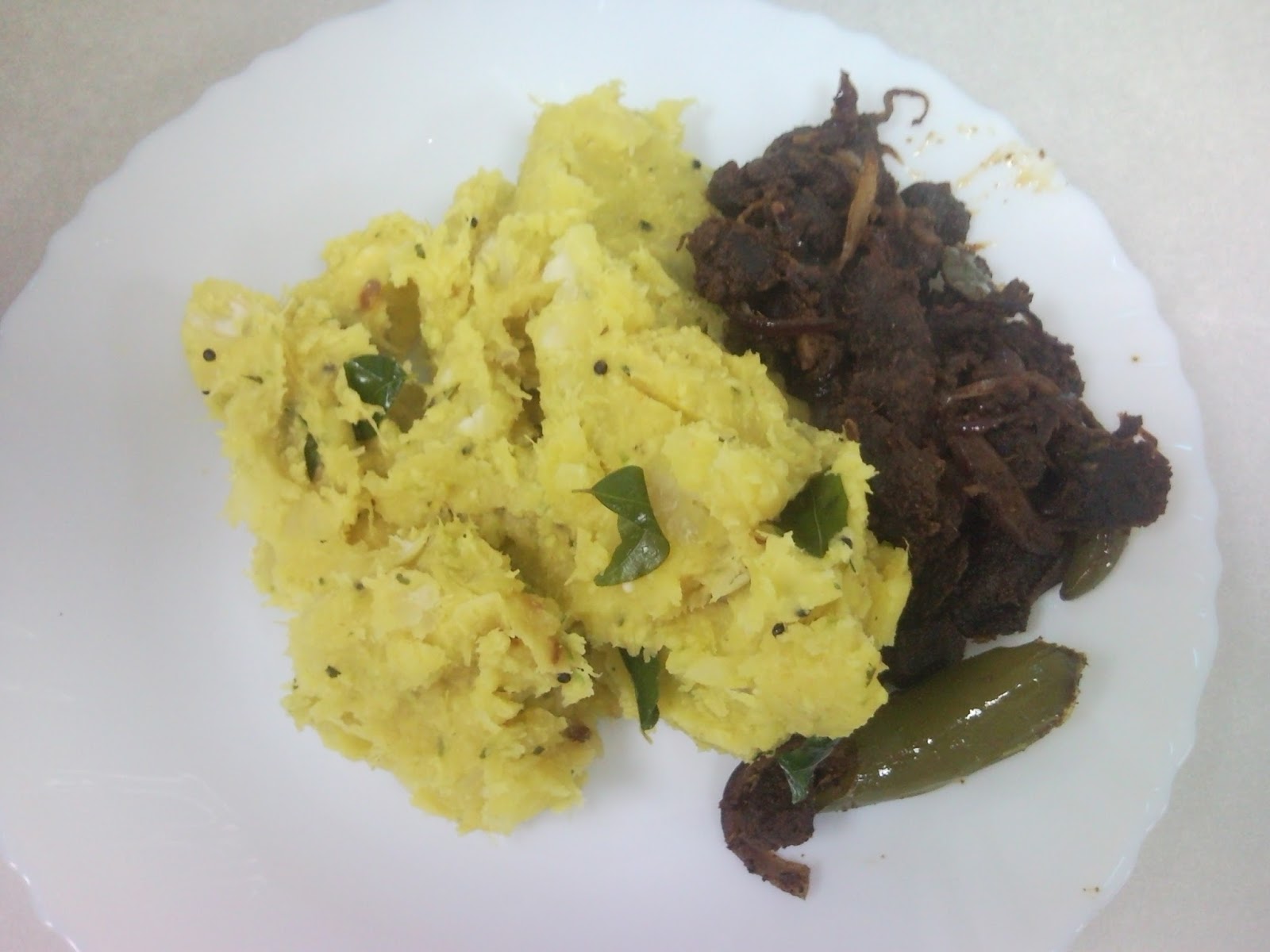
mixed with grated coconut, chili, salt, turmeric etc., then steamed and mashed
into a dry pudding. This can be garnished in oil with mustard, onion, curry
leaves etc. if desired. Tapioca cakes (chendan kappa) are often eaten with
simple chili sauce (a paste of Green/Red Chili + Shallot + small red Onion +
Garlic + Salt + Oil).
Mashed tapioca is paired with meat or
fish curry, especially sardines, as a delicacy in Kerala. Mashed tapioca with
dried salted sardines directly cooked on charcoal and green chili is another
popular combination.
Tapioca can be stored for longer
periods by parboiling and drying it, after skinning and slicing it into
0.5 cm thick pieces. This is called unakka kappa (dried tapioca). Tapioca
chips, thinly sliced tapioca wafers, similar to potato chips, are also popular.
 |
| Baby Plant (Tapioca Plant at the initial stage ) |
 |
| Grown up Tapioca Plant |
Tamil Nadu
Cassava plant in early stage
Mature cassava plant
In Tamil, the roots of
tapioca are called maravalli
kizhangu, and are used to prepare chips. Tapioca chips are also prepared
in parts of South India.
Tapioca pearls are referred to as
"javvarisi" in Tamil. Most of the delicacies are cooked from this
form of tapioca because it is relatively easier to handle than the raw root
itself. Tapioca is cultivated more in several districts, providing steady
income to farmers. Tapioca can be consumed raw (after removing the skins/outer
cover) or boiled for various dishes or snacks.
Northeast India
In Nagaland and Mizoram in Northeast
India, tapioca is eaten as a snack. It is usually boiled with a bit of salt
in water after skinning it, or snacks are made by drying the tapioca after
cutting it. It is then powdered into flour and turned into dough to either make
a fired or baked biscuit. In their local dialect, they call it kuri aloo, meaning "wood
potato". These chips are eaten by all groups of society as a delicacy. The
skin of the tapioca, which is not edible for humans, is kept aside to prepare a
food for domesticated pigs.
In Assam, sabudana is also used as
substitute diet against boiled rice (bhaat) for the sick elderly or infirm for
easy digestion and strength.
Africa
Tapioca is eaten in the regions
of Nigeria and Ghana as a common meal usually
at breakfast.
Cassava is a staple food in West Africa
where it is widely eaten. In Nigeria, cassava is grated and dry roasted
into gari, this is eaten
by adding water, sugar and or peanuts accompanied by meat or smoked fish. Gari
is also made into eba by
adding hot water, this is eaten with stew or soup. The Ijebu people
of Nigeria make a cold water variant of eba by pounding the mixture with their
fist until it becomes homogenous; this is called feshelu. The Egbas of Abeokuta, Ogun State peel,
dry and grind cassava into a powder called elubo, which is then made into amala paki and eaten with a jute leaf stew called ewedu.
In Lagos, cassava is processed into
tapioca which is cooked in coconut milk and sugar, this can be eaten as a
breakfast meal or as a dessert at parties or dinner. This is called mengau.
The Igbos of Eastern
Nigeria add palm oil and other seasonings to grated cassava during roasting, a
dish called abacha.
Peoples of the Niger Delta extract
starch from cassava cooked into a starch eaten with pepper soup.
In Ghana, cassava is peeled, boiled
until tender, then pounded in a large wooden mortar and pestle until it becomes
homogenous. This is called fufu.
It is eaten with soup.
Europe
Tapioca is not as widely used in
Europe, but several countries use tapioca. In Belgium, small white tapioca
pearls are added to clear soups. Tapioca balls are used in French desserts,
such as parfaits. The savory snack in the United Kingdom, Skips,
are made of tapioca and flavored like prawn cocktail, as well as
other flavors.
Tapioca is also widely available in its
dried forms and is used to make tapioca pudding.




.png)
